Your Program Page Isn’t the Problem.
A working adult sits down after their shift, maybe 9 p.m., maybe later, and types something like this into ChatGPT:
“I have $6,000 in tuition assistance from my employer and about 18 months to complete something. I work full time. I want a credential that will move me into healthcare IT.”
That question is specific, high-intent, and increasingly answered before your program page ever loads.
The AI synthesizes options from a dozen sources, accreditation databases, Reddit threads, LinkedIn job posts, review platforms, news coverage, and returns a ranked recommendation. If your program is described consistently and specifically across those sources, you might be in it. If your website says “flexible, career-focused, student-centered” and your Google Business profile hasn’t been touched since 2021, you’re probably not.
Legibility is becoming the enrollment strategy.
The Zero-Click Reality for Education
Zero-click isn’t new vocabulary, but its implications for higher ed and skills-based learning are still catching up. For years, enrollment followed a predictable sequence: ads, lead capture, nurture, conversion. The website sat at the center.
It isn’t anymore.
AI systems aren’t reading your 800-word program description. They’re extracting signals: audience clarity, outcome specificity, credential recognition, time-to-completion, cost transparency. If those signals are buried in marketing copy or inconsistent across platforms, the AI doesn’t include you. Because you’re not clear.
The adult learner asking about healthcare IT credentials is a perfect example of the audience most exposed to this shift. These prospective students don’t have the luxury of a six-month research window. They’re making fast, high-stakes decisions. They trust a synthesized answer more than they trust a seven-page program overview. Which means if you’re not in the answer, you don’t exist in that decision.
What Legibility Actually Means
An AI system assigning credibility to your program needs to see the same story across multiple surfaces: your program page, your Google Business profile, your LinkedIn presence, your Coursera or third-party listing, any press coverage your outcomes have generated. When those sources agree, same audience, same outcomes, same differentiators, authority compounds. When they conflict, or when any of them are vague, the system assigns classification friction. That friction reduces inclusion.
“Flexible scheduling for working adults” is friction. It tells the machine almost nothing retrievable.
“Designed for full-time employees in healthcare or technology roles, completable in 12–18 months, with employer tuition reimbursement compatibility” is legible. It contains audience, timeline, cost context, and use case. An AI can extract that, synthesize it, and surface your program when the right question gets asked.
The Practical Move
This doesn’t require a full content overhaul. You need an audit with a specific lens.
Pull your top five program pages. Ask one question about each: If an AI system read only this page, what type of learner would it recommend this program to, and with what level of confidence?
If the answer is vague or generic, that page is creating friction. The fix isn’t more content. It’s sharper specificity, defined audiences, stated outcomes, clear time and cost parameters, and the same language repeated across every platform where your signal exists.
Then run the test. Open ChatGPT or Perplexity and ask the questions your prospective students are actually asking. “Best cybersecurity certification for working adults under $8,000.” “Fastest healthcare management degree for someone with an associate’s.” See who shows up. Study the language used to describe the programs that do.
That gap between where you appear and where you should appear, that’s your editorial roadmap.
The Enrollment Advantage Is Structural Now
The institutions winning the AI visibility race aren’t spending more. They’re describing more precisely. They’re auditing more consistently. They’re building systems that treat every platform as a signal, not just a channel.
Your program is probably better than how it’s currently described. The question is whether the machines that mediate the first decision can tell.




OUR LATEST WHITEPAPER
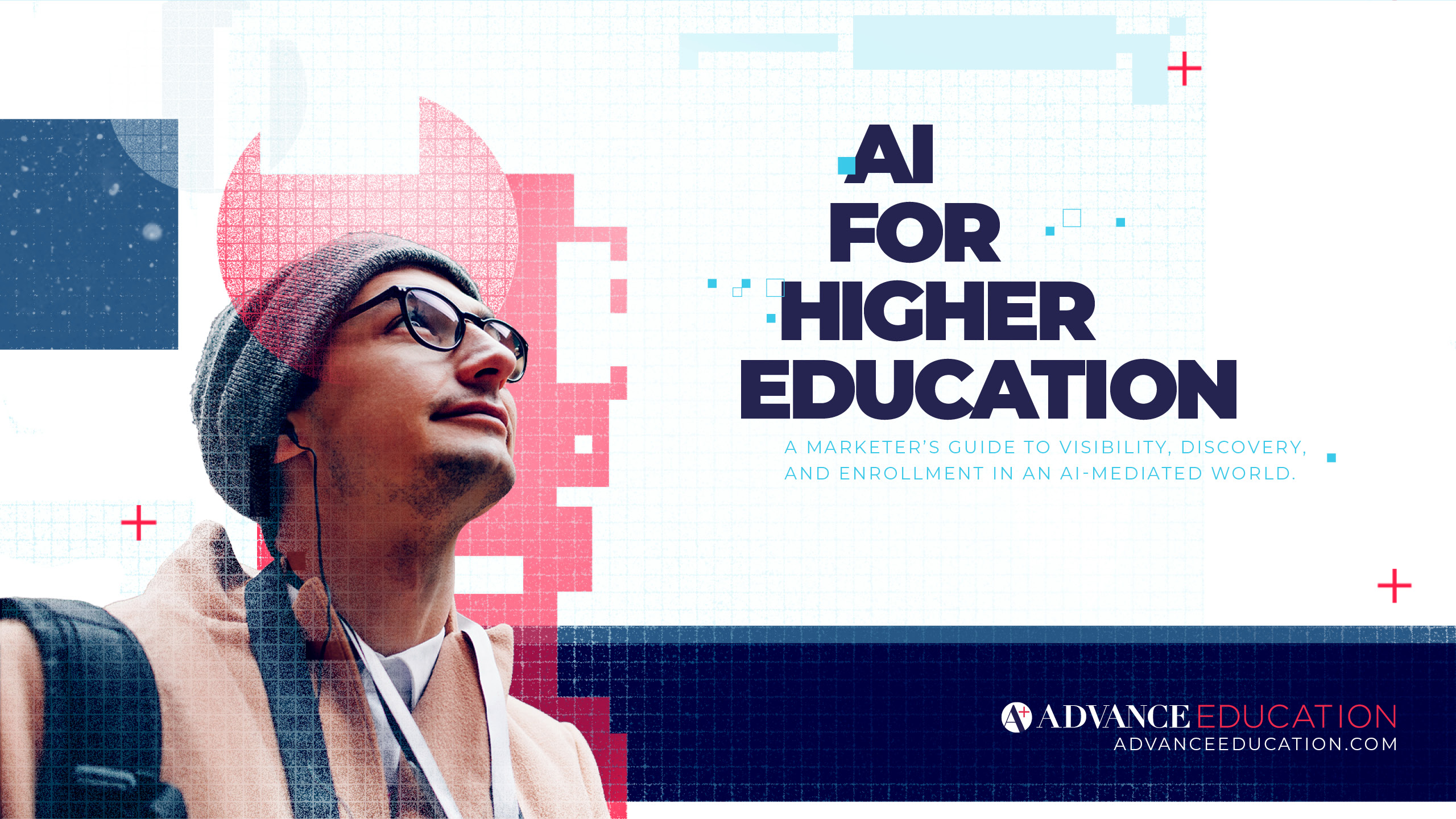
AI for Education
A Marketer’s Guide to Visibility, Discovery, and Enrollment in an AI-Mediated World
Prospective students aren’t just searching differently. They’re discovering, comparing, and evaluating institutions through AI before they ever visit a website.
This guide explores how AI is reshaping the enrollment journey and what enrollment marketers can do to improve visibility, build trust, and prepare for the future of student discovery.