The Barriers Graduate Learners Weigh Before Enrolling
Graduate Learners approach education with clear goals and long-term plans. At the same time, practical considerations shape how they evaluate programs and decide when to enroll.
The top barriers shaping enrollment
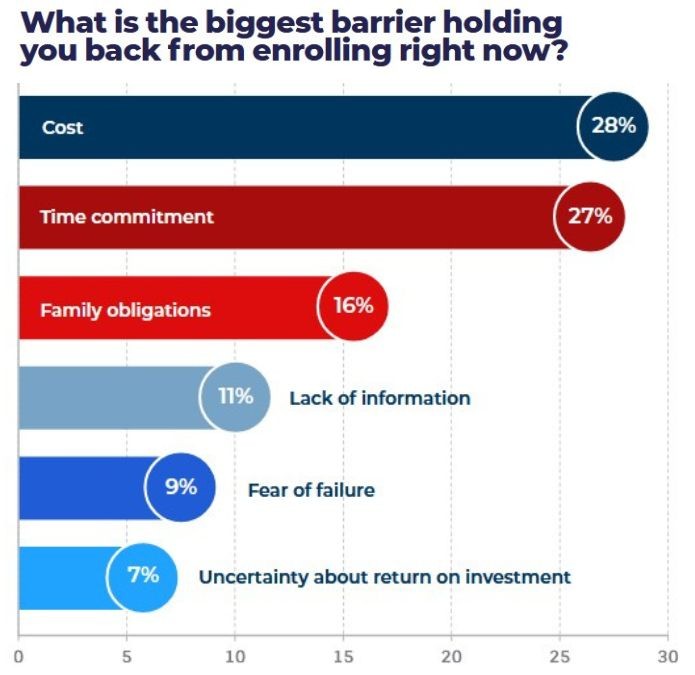
Graduate Learners consistently cite three factors that influence their readiness to move forward.
- 28% cite cost as their biggest barrier
- 27% point to time commitment
- 16% identify balancing work, life, and school as a key challenge
These concerns reflect the real tradeoffs professionals manage every day. Tuition, workload, and scheduling clarity play a central role in how programs are compared.
What this means for graduate programs
Graduate Learners value transparency around program expectations. Clear details about cost, time to completion, weekly workload, and career outcomes support confident decision making. Programs that communicate these elements early and consistently build trust throughout the enrollment journey.
Why clarity matters
When information is accessible and specific, Graduate Learners feel prepared to evaluate options and move forward. Confidence grows through clarity, and clarity supports momentum.
For a deeper look at how Graduate Learners evaluate programs, weigh barriers, and define value, explore the full research in The Era of Intentional Enrollment: A Guide to Understanding the Graduate Learner.
Access the 2026 Graduate Learner Insights. Understand how professionals choose graduate programs.
Get your copy now.
Download
The Era of Intentional Enrollment
A Guide to Understanding The Graduate Learner

We’re proud of our work





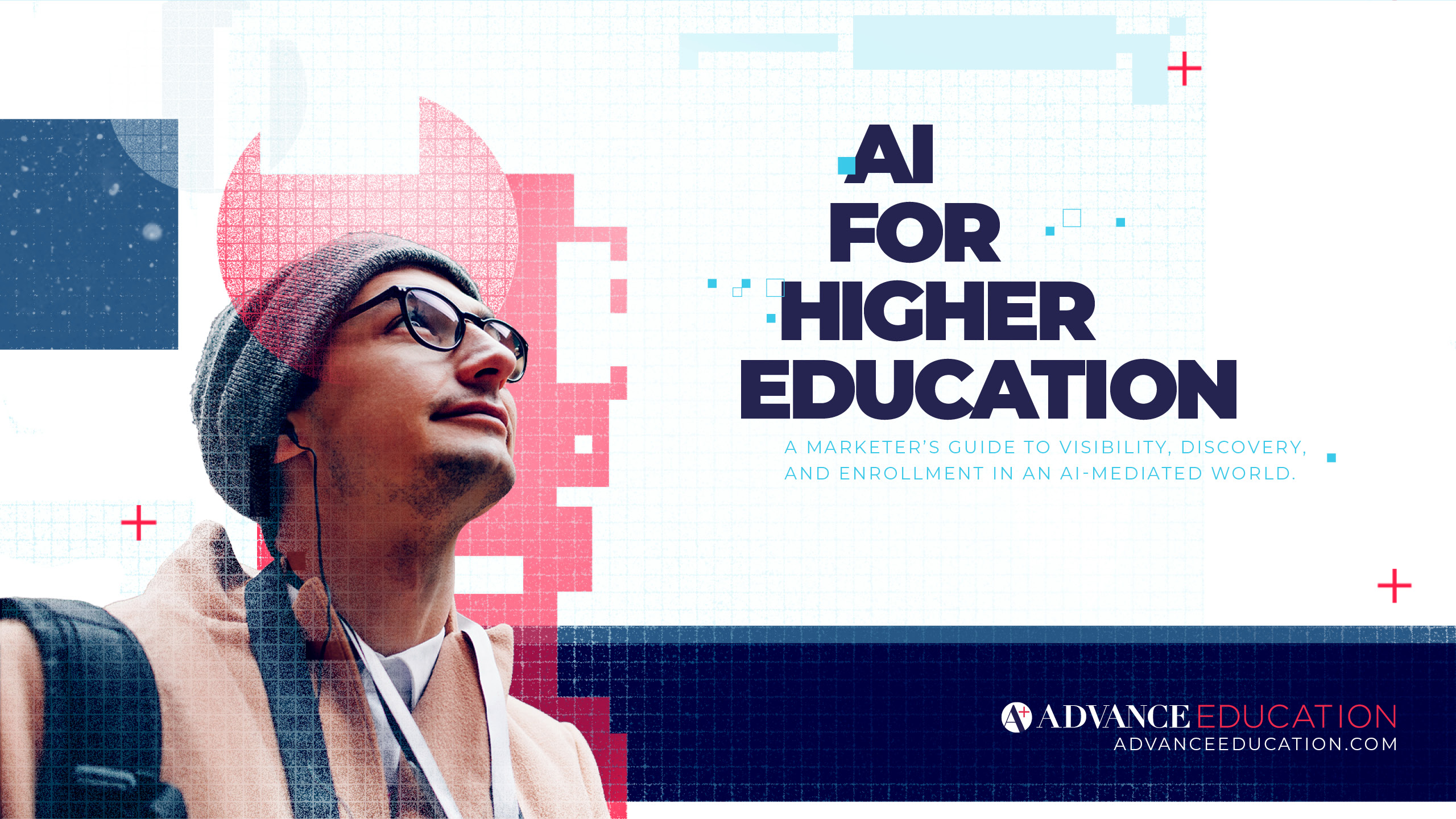
OUR LATEST WHITEPAPER
AI for Education
A Marketer’s Guide to Visibility, Discovery, and Enrollment in an AI-Mediated World
Prospective students aren’t just searching differently. They’re discovering, comparing, and evaluating institutions through AI before they ever visit a website.
This guide explores how AI is reshaping the enrollment journey and what enrollment marketers can do to improve visibility, build trust, and prepare for the future of student discovery.