The Cookie Rollercoaster Continues
Have you ever been on a rollercoaster that stops and you think the ride is over, but then you start going in reverse? That’s sort of what’s happening with online cookies.
In 2020, Google announced their plan to phase out 3rd party cookies (the small pieces of data that allow marketers to serve personalized ads across websites). In January 2024, Google began restricting access to third-party cookies by default to 1% of Chrome users. The plan was to restrict access to third-party cookies to all Chrome users in 2024 . . . or 2025. Now, the rollercoaster ride has reversed. Google announced on July 22 that they no longer plan to deprecate third-party cookies.
What happens now?
Google is “proposing an updated approach that elevates user choice.” (source) How Google will prompt users to decide how their online data is used is unknown at this time. Google could follow a similar path that Apple took with their App Tracking Transparency (ATT) feature, which prompts users to decide “Allow” or “Ask App Not to Track”. It’s also possible a user’s choice will be found in browser settings or be somewhere else entirely. In the meantime, Google is continuing to develop the Privacy Sandbox, their replacement for third-party cookies. This allows Google to continue developing cookie-free solutions without the need for a specific date to bring an abrupt end to third-party cookies in Chrome.
Does this change anything for marketers?
No. Cross-site tracking cookies will eventually be a thing of the past. Our industry is evolving. Remember, Safari and Firefox started blocking third-party cookies back in 2017. The steps marketers have been taking to prepare for Cookiepocolypse are still valuable.
Here are a few examples:
- The Resurgence of Contextual Targeting
Placing an ad alongside relevant content is always a good idea. In the golden age of cross-site tracking, many marketers shied away from contextual targeting. One of the positive outcomes of the cookie conversation is an emphasis on thoughtful and diverse audience targeting strategies. This tactic will continue to be a great option available to marketers, regardless of cookies.
- Increase in 1st Party Data Collection
Collecting data that gives deeper insight into your customers is immensely valuable. The brands who developed or enhanced their 1st party data strategy following Google’s original cookie deprecation announcement are able to build customer persona profiles and tailor their messaging and offers to deepen relationships with their customers using information that their competitors don’t have. 1st party data and 1st party cookies will continue to be future-proof and provide benefits to those who use it strategically.
- Attention to Privacy and User Control
Data privacy, cyber security, and regulations (like GDPR) are part of our everyday lives. Brands that prioritize user experience and invest in measures to protect their customer’s information will have an advantage over those who don’t. There’s a reason why Apple’s ad campaigns promote their privacy features. “Privacy. That’s iPhone” (example) This is important to consumers and should continue to be a consideration for brands.
The Ride Continues
Now that we’ve reversed our rollercoaster ride, I don’t expect it to end anytime soon. When cookies are obsolete or blocked – whichever comes first – the industry will continue to evolve.
The best thing to do now is enjoy the ride and find a marketing partner that has the tools, insight, and expertise to help you achieve your goals.
If you need assistance navigating through Google cookies, don’t hesitate to contact our team today.




OUR LATEST WHITEPAPER
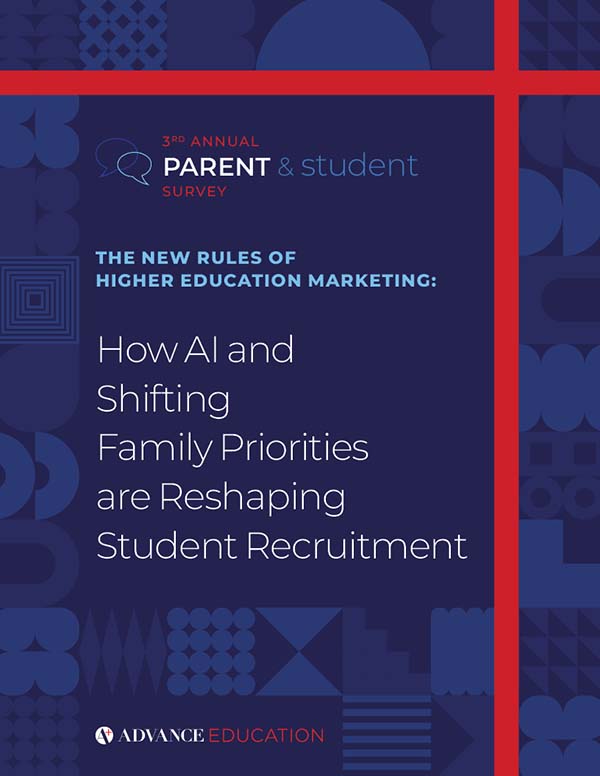
3rd Annual Parent & Student Survey
The New Rules Of Higher Education Marketing
How AI and Shifting Family Priorities are Reshaping Student Recruitment
AI isn’t new. It’s normal. Students and parents alike are increasingly using LLMs for research – for everything from homework help to their best options for higher education. If families already use AI to choose, the question is: how is your institution meeting them there? Our latest whitepaper outlines how to publish AI-readable answers to the most asked questions, making your value legible to both humans and machines.